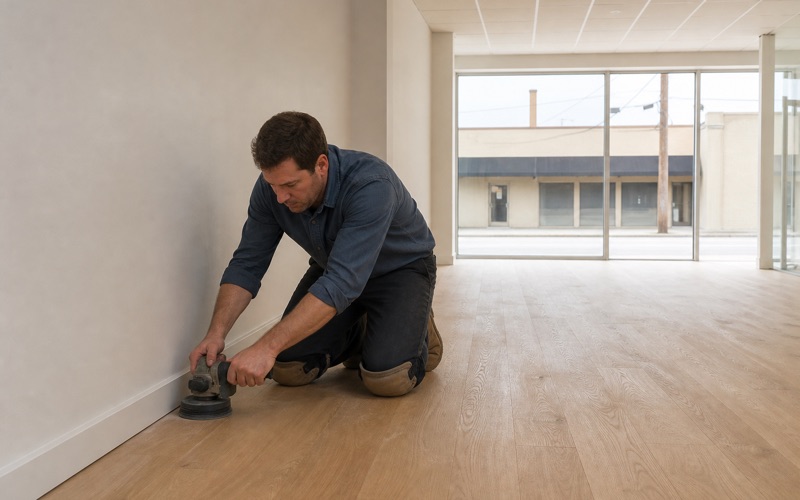
Bell Gardens Wood Flooring provides wood flooring in Watts, and the work here starts with a question that gets skipped almost everywhere else: what actually is this floor, and when did it go down? Records for individual houses in a long-settled neighborhood are frequently incomplete, contradictory, or simply absent.
That is not an obstacle so much as a reason to work differently. A wood floor is an unusually honest document about itself. The width of the boards, the way they were cut, the species, the fasteners holding them down and the layers of finish on top all carry information that no county record does, and all of it is readable in the first half hour on site.
We would rather establish what a floor is from the floor than assume it from an address or a supposed build date. It costs a little time at the start and it prevents the much more expensive mistake of specifying work for a floor that turns out to be something else entirely.
Reading the Boards
Width, Cut and Species
Board width alone narrows the era considerably, since the narrow strip common in one period gives way to wider board in another, and both differ again from what is milled today. Species is the next marker: oak in principal rooms with Douglas fir elsewhere is a very common arrangement in older housing across this whole area.
How the board was cut matters as much as what it is. Rift and quartered material behaves differently from plainsawn and looks different once sanded, and old-growth fir has a tight grain quite unlike the fast-grown timber sold under the same name now. We identify all of it before recommending anything.
Fasteners as Evidence
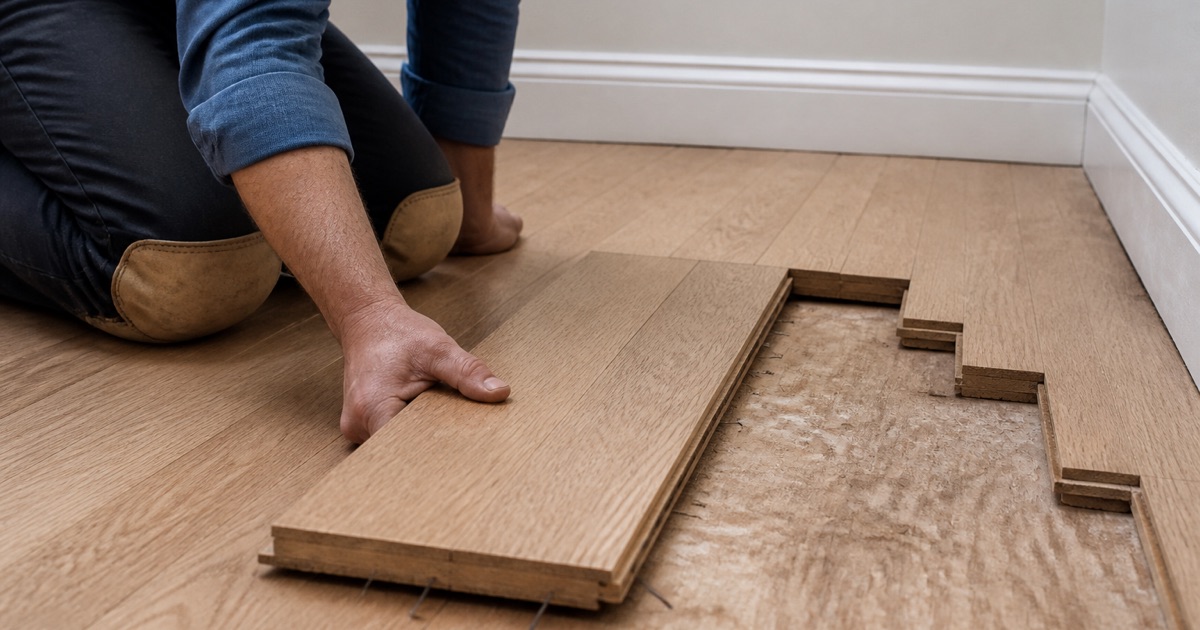
Cut nails, wire nails, face nailing and blind nailing through the tongue all belong to different periods and different practices, and what is holding a floor down is one of the more reliable indicators of when it was laid. It also tells us how the floor will behave when we start lifting boards. That matters practically rather than academically. A face-nailed floor comes up differently from a blind-nailed one, a floor over board subfloor behaves differently from one over plywood, and knowing which we are dealing with decides how a repair is approached before anybody starts prising anything.
Fastener spacing is worth reading too. A floor fixed at generous intervals by the standards of its day will move more than a modern schedule allows, and that occasionally explains a pattern of squeaks that has nothing to do with the subfloor beneath it.
Layers of Finish
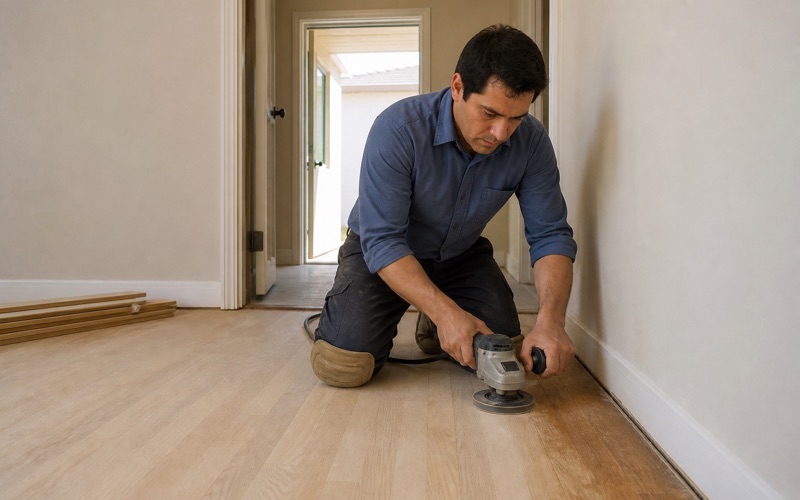
Most old floors carry several finishes on top of one another, applied over decades, and the sequence is legible once you start cutting back. Shellac, wax, varnish and later polyurethanes all behave differently under a machine and need different handling.
This is genuinely useful rather than a curiosity. A floor with wax under a later coating will not take a new finish without the wax being removed completely, and a contractor who skips that step produces a finish that fails to bond and lifts within a year. We check before sanding rather than discovering it during.
The number of layers also indicates how often the floor has been recoated rather than sanded, which is useful history. A floor that has been maintained with recoats has spent far less of its thickness than one that was taken back to bare wood every time it looked tired. Looking for wood flooring closer to East Rancho Dominguez? See Wood Flooring in East Rancho Dominguez.
What the Reading Changes
Whether the Floor Can Be Saved
The most consequential thing the boards tell us is how much thickness remains above the tongue, which decides whether a floor can be sanded again at all. We measure at a vent or a threshold rather than estimating from the surface, because the surface tells you very little. A floor with capacity left is a restoration job and a floor without is a replacement, and those are different conversations with very different costs. Establishing which one you are in during the first visit is more useful than any other single thing we do on that visit.
There is also a middle answer that gets overlooked. A floor too far gone for a full sand can frequently still take a screen and recoat, which buys years and costs a fraction, and that is a legitimate route for a household not ready to replace a floor this year.
How a Repair Should Be Done
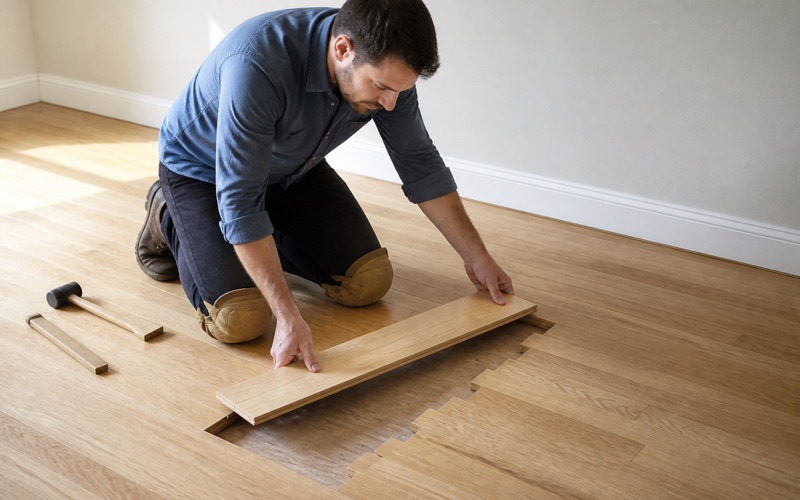
Where boards need replacing, everything read from the existing floor feeds directly into sourcing: species, width, thickness and the tongue and groove profile all have to line up for a repair to disappear rather than announce itself. Profile is usually the hard part, since milling has changed. Salvage is frequently the right answer on a floor of this age, and reclaimed board of the right period can be worked to fit where new stock cannot. We say at the quote whether a genuine match is achievable rather than discovering it with the floor already open.
We keep an eye out for reclaimed stock of the right era and species as a matter of routine, since these floors recur across this whole part of the county. A board saved from one job is frequently exactly what the next house turns out to need.
What the House Has Been Through
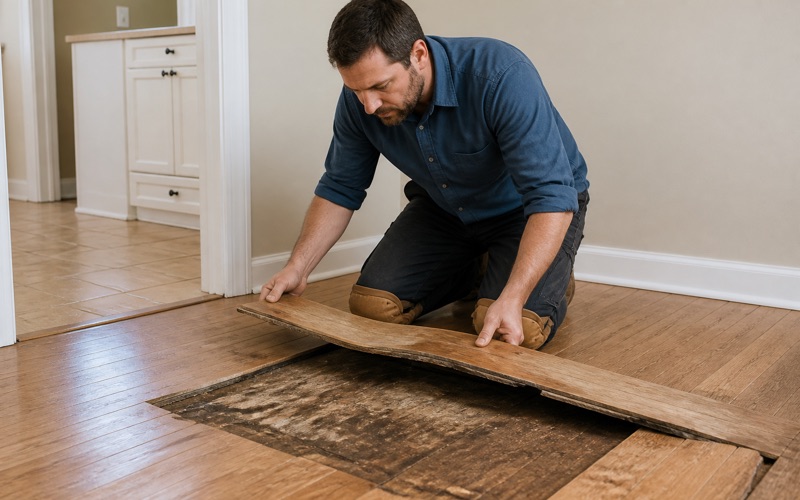
A floor also records what has happened to the house. A patched area tells you where a wall once stood or where a leak once was, a run of replaced boards marks an old repair, and a change of direction usually marks an addition or a removed partition. Reading that before starting means we are working with the history rather than against it. It regularly explains a soft spot, a run of squeaks or an area of cupping that would otherwise look like a defect in the boards themselves rather than a consequence of something that happened decades ago.
It occasionally changes the recommendation entirely. A patch of cupping directly under where a water heater once stood is a resolved problem rather than an active one, and that floor may need nothing more than sanding once it has finished equalizing.
Choosing What Goes Down
Solid Wood Where the Structure Takes It
Where a house sits on raised construction with framing in sound condition, solid nail-down remains the longest-lived floor available, and it can be sanded back several times across a very long life. That capacity is the whole argument for it. What decides whether it is available is the condition of the framing and the behavior of the crawl space underneath, rather than the budget. We look before recommending, because a solid floor fastened over a substrate we have doubts about is a decision regretted slowly rather than immediately.
Engineered Where Concrete Is Involved
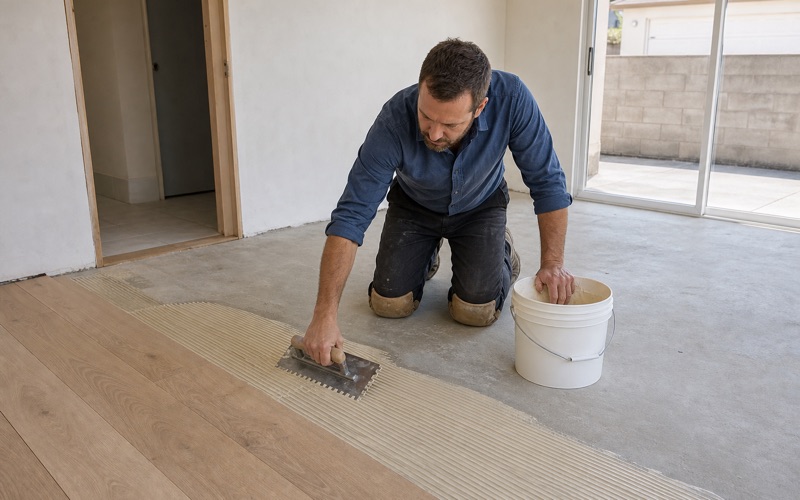
Where a house or an addition sits on slab, solid wood is not the right product and we will say so rather than take the work. Concrete offers nothing to fasten into, and solid board moves too much with moisture to sit on it. Over a slab the appropriate products are glue-down or floating engineered, chosen against a measured relative humidity reading rather than a preference. A well-specified engineered board with a substantial wear layer will comfortably outlast a poorly chosen solid floor, and we state that thickness in millimeters.
Moisture Before Anything Else
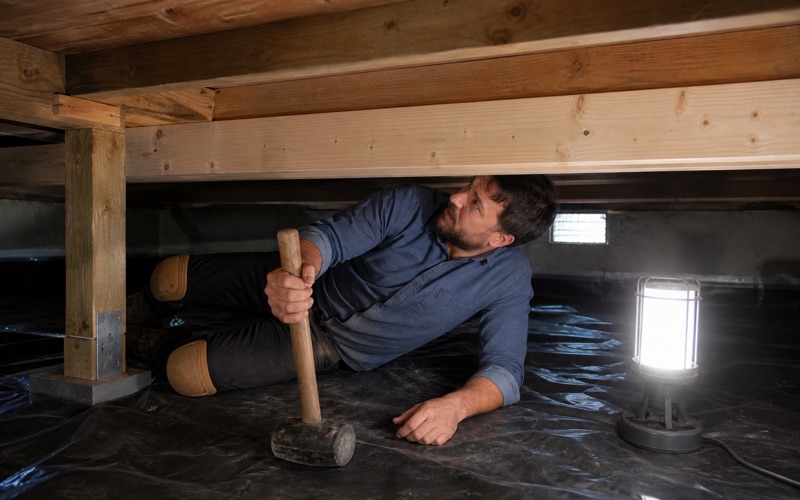
Under a raised floor, bare soil releases moisture into the joists and the underside of the boards continuously, all year, whether or not anybody notices it. A properly laid polyethylene ground cover with genuinely clear vents corrects a good share of cupping complaints by itself. It is one of the cheapest interventions in this trade and among the most frequently skipped, largely because nobody photographs a crawl space. Sanding a floor flat while the source underneath is still active buys a single season and spends thickness that cannot be recovered.
Working Here
Watts and the Streets Around It
Watts is a neighborhood in southern Los Angeles, bordering Lynwood, Huntington Park and South Gate to the east and southeast, and the unincorporated community of Willowbrook to the south. Unlike most places we work, it is part of the City of Los Angeles rather than a separate city, so the city is the authority for building matters. For flooring that distinction is worth knowing at the outset, because a contractor quoting a county process for a City of Los Angeles address has not paid attention to where they are. We handle both across our service area and the difference is straightforward once somebody has explained it.
Lead-Safe Practice on Older Housing
On any house built before 1978, sanding falls under the federal Renovation, Repair and Painting rule, and older housing is exactly what that rule was written about. Containment, sealed openings and controlled cleanup are the required method rather than an optional upgrade offered afterward. We work that way as standard, and it produces a better finish as a side effect. Most of what spoils a coat is airborne dust settling into it while it is still wet, so a contained job simply looks better than one done with the doors propped open.
Restoring Rather Than Replacing
Our bias on older housing is toward keeping what is already there, and it is not sentiment. Restoration is frequently cheaper than replacement because there is no material to buy and no disposal beyond sanding waste, and the original boards are often better material than anything currently available.
We are not sentimental where it is not warranted. A floor sanded to the tongue has nothing left to remove, and widespread damage or a failed subfloor underneath are replacement conditions. The point is that the question gets asked properly rather than answered by whichever job carries the larger invoice.
- Licensed & Insured
- 20+ Years Experience
- Free Written Quotes