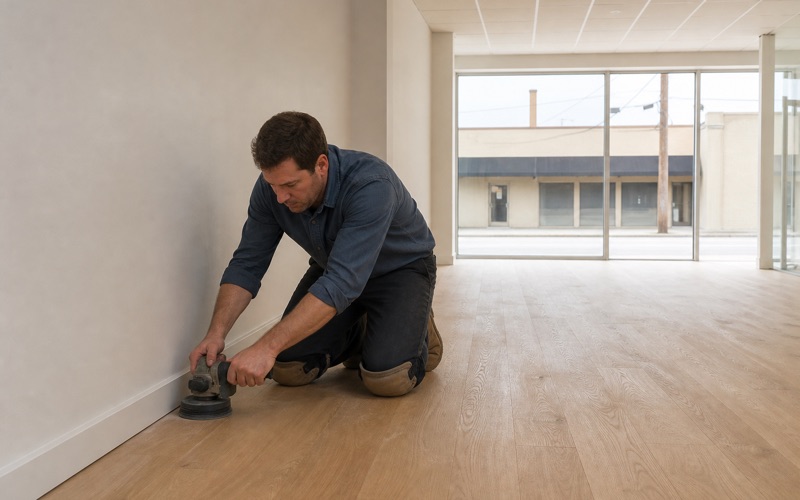
Bell Gardens Wood Flooring provides wood flooring in San Marino for the oldest and most intact housing stock anywhere in our service area. Around seven homes in ten here predate 1950, and unlike most places of that vintage these houses have largely been maintained rather than altered, which means an unusual amount of original floor survives.
That changes the work fundamentally. In most cities we are deciding between restoring a worn floor and replacing it. Here we are far more often conserving something that was expensive when it was laid and is effectively irreplaceable now: parquet panels, bordered rooms, feature strips and pattern work in species that are no longer available at any sensible price.
The instinct to replace is the wrong one on these floors, and it is a surprisingly common recommendation from contractors who do not recognize what they are looking at. Our default is to keep, repair and refinish, and to say clearly when that genuinely is not possible.
Recognizing What Is There
Parquet and Pattern Work
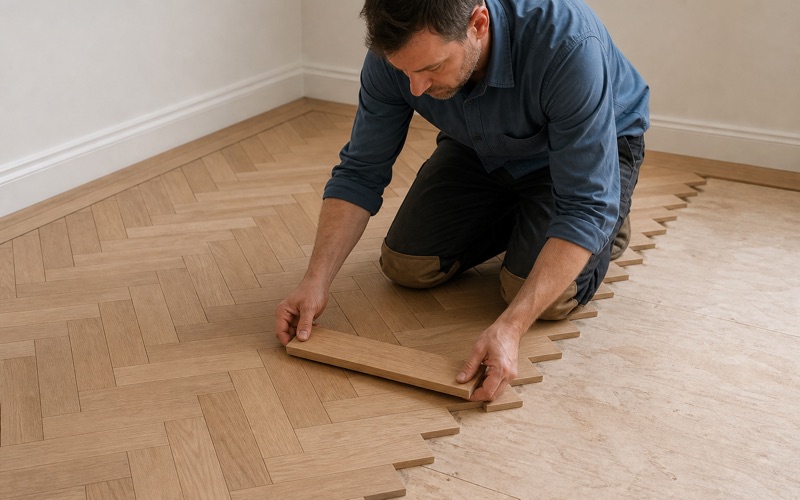
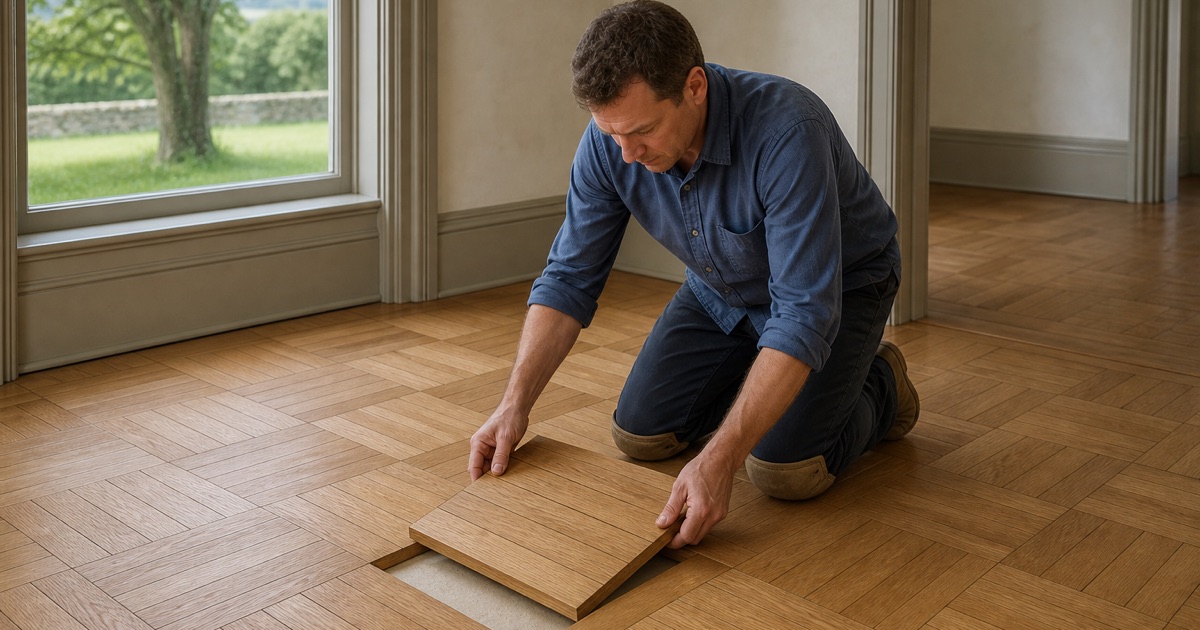
Houses of this period and this standard were frequently laid with true parquet panels, herringbone fields, or a running floor framed by a border and feature strip. Those are joinery rather than flooring, laid by hand piece by piece. The value is in the layout as much as the material. A border defines the room it encloses, and a repair laid without regard to that logic destroys the reasoning behind the whole floor even where the wood itself is fine.
San Marino was incorporated in 1913 and had a population of 12,513 at the 2020 census, sitting in the San Gabriel Valley. Its housing went in during a period when this kind of floor was normal specification rather than an extravagance.
Species No Longer Milled This Way
The oak in these floors came from timber that grew slowly, and it is denser and tighter grained than current stock of the same nominal grade. Quartersawn and rift material was used far more freely than it is now. Some of these floors also carry species that are effectively unavailable today, or available only at prices that make replacement absurd. Recognizing that before recommending anything is the whole job on a first visit.
We identify species, cut and grade properly rather than assuming from appearance. A contractor who reads quartersawn oak as ordinary strip will price a replacement that nobody should accept.
How Much Life Remains
The decisive measurement is still thickness above the tongue, and on parquet it is thickness above whatever the panel construction allows. We measure at a vent, a threshold or a discreet edge rather than judging from the surface. Many of these floors have been refinished once or twice across a century, which is remarkably few for their age and reflects how they were maintained. Others have been taken back repeatedly and have very little left.
Where a floor is genuinely at the end of its sandable life, a screen and recoat still resets its surface without touching the wood, and that can extend it by years. It is almost always worth doing before considering anything more drastic. Looking for wood flooring closer to Cudahy? See Wood Flooring in Cudahy.
Restoring in Place
Sanding Pattern and Parquet
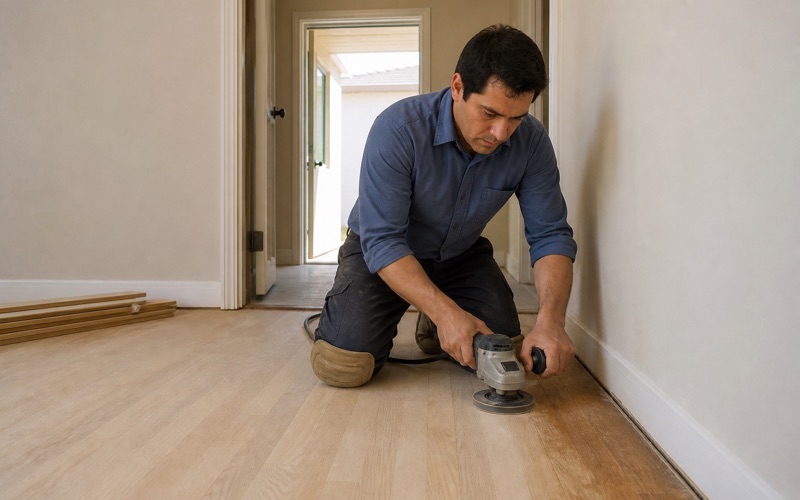
A pattern floor sands differently from a running floor because grain direction changes every few inches, so a machine driven in one direction raises grain on half the pieces. It takes more passes, lighter cuts and considerably more care. Aggressive sanding across a border can take out the definition between two species entirely, which is unrecoverable. We work conservatively around every detail rather than treating a bordered room as a single field.
Corners, thresholds and anywhere adjoining built-in cabinetry are hand work. On floors of this quality those areas are exactly where the original craftsmanship is most visible.
Repairing Rather Than Replacing Panels
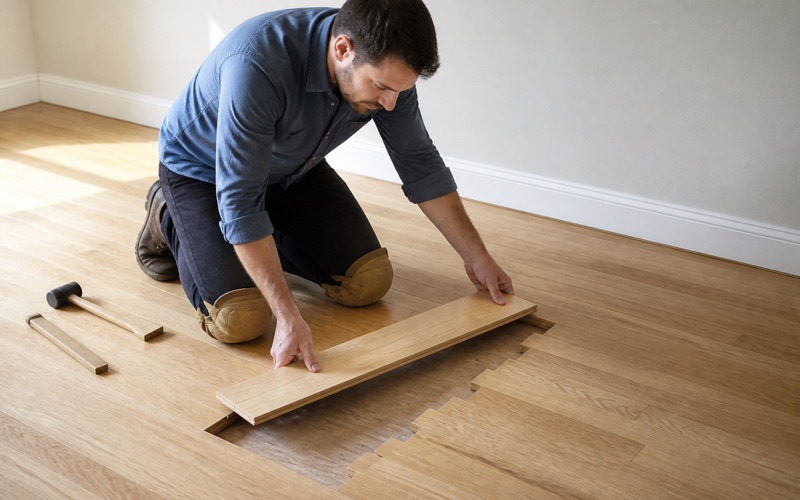
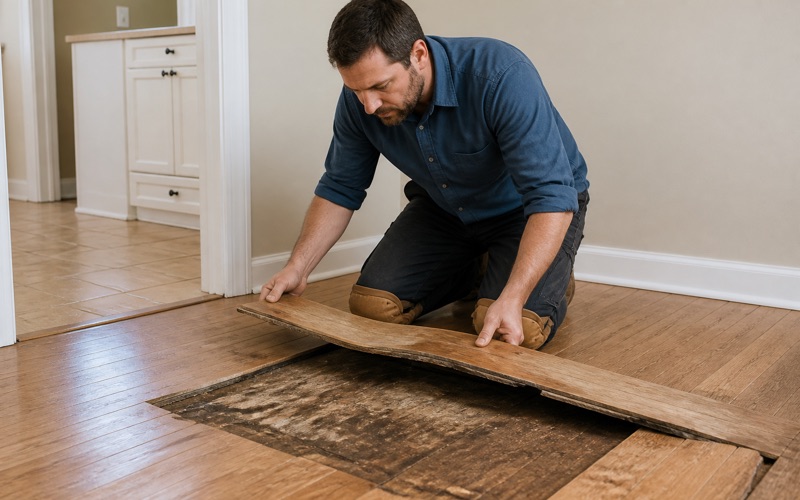
Individual parquet blocks and pattern pieces can be lifted and replaced, which makes these floors far more repairable than people assume. A damaged area does not condemn a room.
A dutchman let into a single board, matched for species and grain direction, handles localized damage without disturbing anything around it. On a floor where matching stock is scarce it is frequently the best available answer. We keep a small quantity of any material lifted during a repair rather than discarding it, because on floors like these an offcut is a genuinely scarce resource for the next repair.
Finish That Suits the Floor
A floor of this age carries a color from a century of light and use that no new finish reproduces. On most of these houses the aim is to preserve it rather than to alter it, and a clear waterborne finish does that best. Oil-modified warms the tone further, which suits some rooms and overwhelms others, particularly where a floor already has strong color. We sample on the actual floor in the room’s own light rather than working from a chart.
Sheen matters as much as color on an old floor with some unevenness left in it. Lower sheen is far more forgiving than gloss, which picks out every ripple the light crosses.
What Sits Underneath
Raised Construction and the Crawl Space
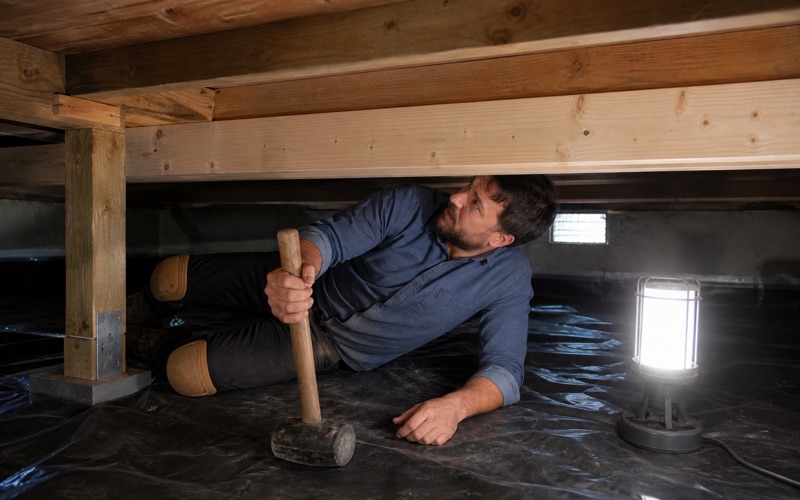
Housing of this vintage here is largely raised construction over a crawl space, and that crawl is where a great many floor problems are actually resolved. Bare soil releases moisture into the joists and the underside of the boards continuously.
A polyethylene ground cover with genuinely clear vents corrects a surprising share of cupping complaints for very little money. It is among the cheapest interventions available in this trade and one of the most frequently skipped. We look before quoting any work on the floor itself, because sanding a floor while the source underneath is still active buys one season and spends thickness these floors cannot afford.
Structure Under a Century-Old House
A house this old has settled, and settlement shows in a floor before it shows anywhere else. Slopes across a room, a hump over a bearing point and gaps that reopen seasonally are all normal reports from an old structure. Distinguishing settled movement from active movement matters, because a floor laid or refinished across active movement repeats whatever the structure is doing. We look for the pattern rather than treating every irregularity as a defect.
Where something looks active we say so and say it belongs with a structural engineer rather than with us. On a house of this value that is not a conversation to have casually.
Lead-Safe Practice
Housing of this age falls squarely within the pre-1978 range, so sanding is covered by the federal Renovation, Repair and Painting rule. Sanding is precisely the disturbance that rule governs. Containment, sealed openings and controlled cleanup are the required method rather than an upgrade offered afterward. On houses of this quality that standard of care is what we would apply regardless.
It also produces a better finish, since most of what spoils a coat is airborne dust settling into it while it is still wet. On a pattern floor with many joints that matters more than usual.
Working on These Houses
Sourcing Matching Material
Where boards genuinely need replacing, matching means species, cut, grade, width, thickness and profile, and on floors of this period the profile is almost always the hardest of those to satisfy. Salvage is usually the answer and it is worth a genuine search rather than a quick one. Reclaimed material of the right era and species can be worked to fit where new stock simply cannot.
We say at the quote whether a match is achievable rather than discovering it with a floor already open. On these floors that conversation is more important than on any other stock we work with.
Protecting the Rest of the House
Working in houses of this standard means protecting a great deal more than the floor being worked on. Adjacent finishes, joinery, plaster detail and stair balustrades all need covering properly rather than casually. We plan access routes and protection before machines arrive rather than improvising once work is underway. Damage to something adjoining a floor is far more expensive than anything we might do to the floor itself.
That is simply the appropriate standard of care for the buildings rather than a premium service. It is also considerably cheaper than making good afterward. Access routes matter as much as the working room itself. Machines and material traveling through a hallway with original joinery need the route protected properly, not a dust sheet thrown down on the morning.
Being Honest About Limits
There are floors we recommend leaving alone, and saying so is part of the job. A floor with a beautiful patina and light wear is frequently better untouched than refinished to look new.
There are also floors beyond our scope, where conservation rather than refinishing is the right discipline. We will say when that is the case rather than taking work we are not the right people for. Our default is to do less rather than more on floors like these, because everything taken off is permanent and nothing can be put back.
That principle applies to the recommendation as much as to the sanding. Where a screen and recoat will genuinely serve, we propose it instead of a full refinish, even though it is the smaller invoice by a considerable margin.
- Licensed & Insured
- 20+ Years Experience
- Free Written Quotes