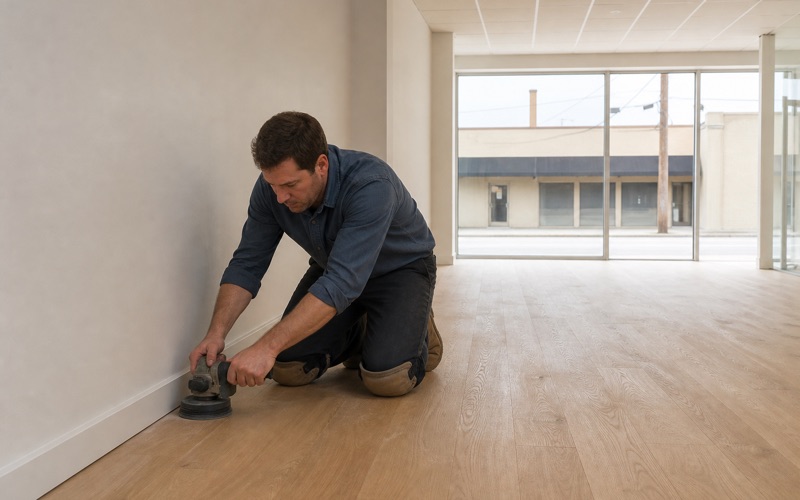
Bell Gardens Wood Flooring provides wood flooring in Hawaiian Gardens with a deliberate bias toward the smallest job that actually fixes the problem. This is the smallest city in Los Angeles County by area, the housing is modest, and a contractor arriving with a whole-floor replacement quote for a two-board problem is not being useful to anybody. That is a real discipline rather than a slogan. Scoping a repair accurately takes longer than quoting a replacement, because you have to establish what is actually wrong, whether the boards around it are sound, and whether a match is achievable before you can price any of it.
Quoting the larger job is quicker and pays better, which is exactly why it happens so often. We would rather do the smaller job well, be trusted, and be the people called back in five years than take one large invoice and never hear from somebody again.
Scoping the Smallest Job That Works
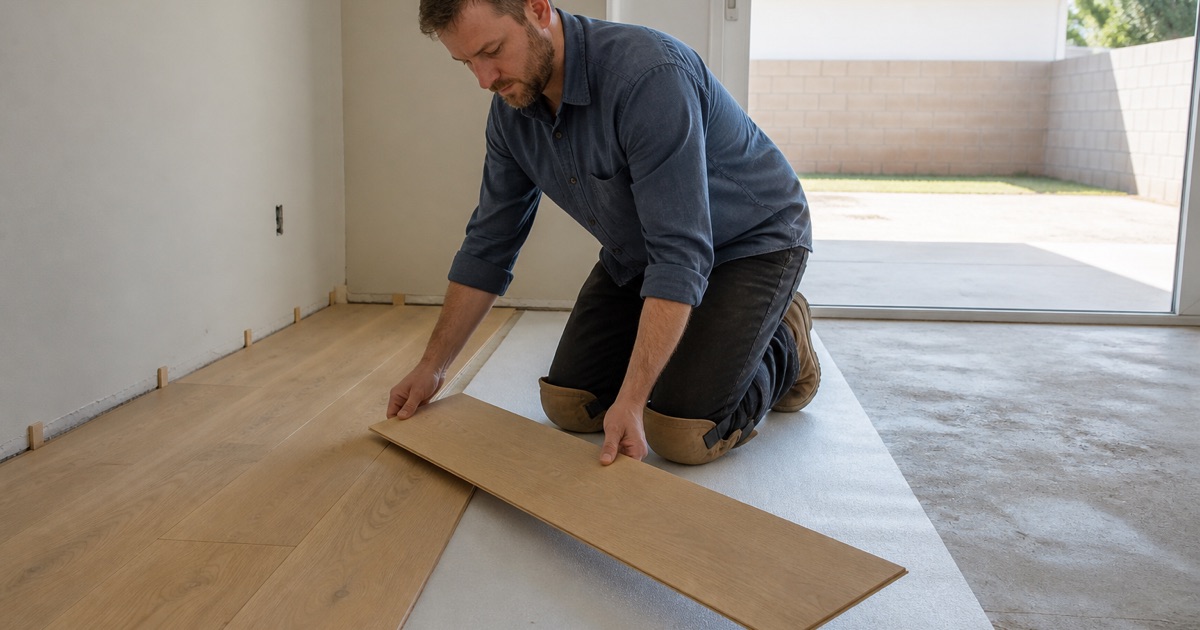
Establishing What Is Actually Wrong
A floor complaint is usually a symptom rather than a diagnosis. A soft patch, a run of squeaks, a discolored area and a section of cupping all have different causes and different correct responses. We map the symptoms across the whole floor before opening anything, because the pattern generally identifies the cause faster than an inspection hole does. A soft line across a room points at a joist; general springiness points at the subfloor.
Getting that right is what decides whether the answer is three boards, one room or a whole floor. It is also the step most often skipped by somebody quoting from a doorway in ten minutes.
Spot Repair Against Whole-Room Work
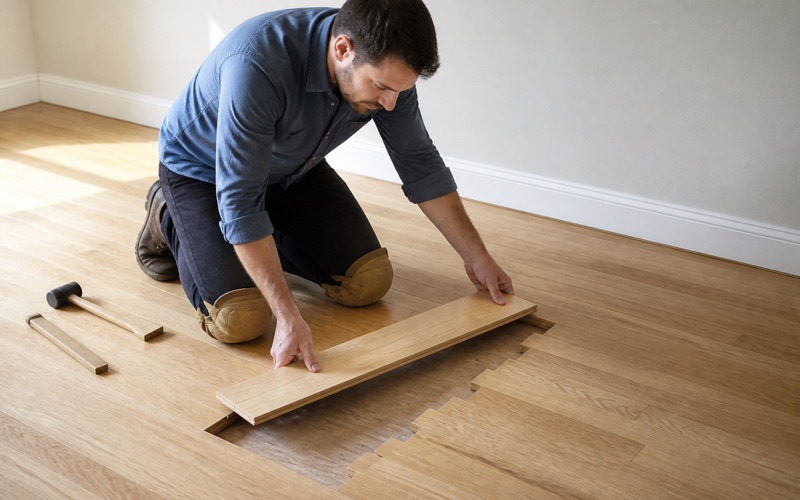
Individual boards can be lifted and replaced without disturbing the boards around them, and new boards woven into the existing field with staggered joints leave nothing visible once the floor is refinished. The limit on a spot repair is usually the finish rather than the wood. New boards do not take stain the way boards that have been down for decades do, so blending a repair into an existing finish is the harder half of the job.
Where a blend would show, the honest answer is refinishing the room rather than the floor. That is a larger job than a repair and a much smaller one than replacement, and it is frequently the right middle answer.
Saying a Floor Needs Nothing
Occasionally the correct recommendation is to leave a floor alone. A floor with light wear and a sound finish, or one with character marks somebody has decided they dislike this week, does not need work simply because we were called out. We say so when it is true. Hawaiian Gardens was incorporated in 1964 and had a population of 14,149 at the 2020 census, and in a city this small a reputation for selling unnecessary work would travel faster than any advertising.
That is not the only reason to be straight about it, but it is a reason worth naming. The commercial incentive here genuinely points the same way as the honest answer. It also means we would rather book a short visit to look than quote over the phone. Ten minutes in the room settles most of these questions and prevents both of us wasting an afternoon on the wrong job.
Looking for wood flooring closer to Signal Hill? See Wood Flooring in Signal Hill.
Repairs We Do Most
Board Replacement and Weaving In
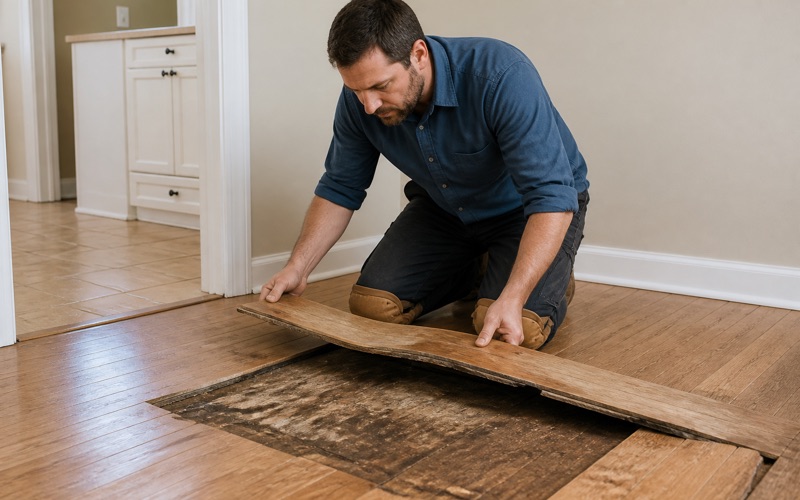
A cracked, split, burned or deeply stained board comes out on its own and a matching board goes in. Done properly the repair is invisible once the floor is refinished, and done as a straight-line patch it announces itself permanently.
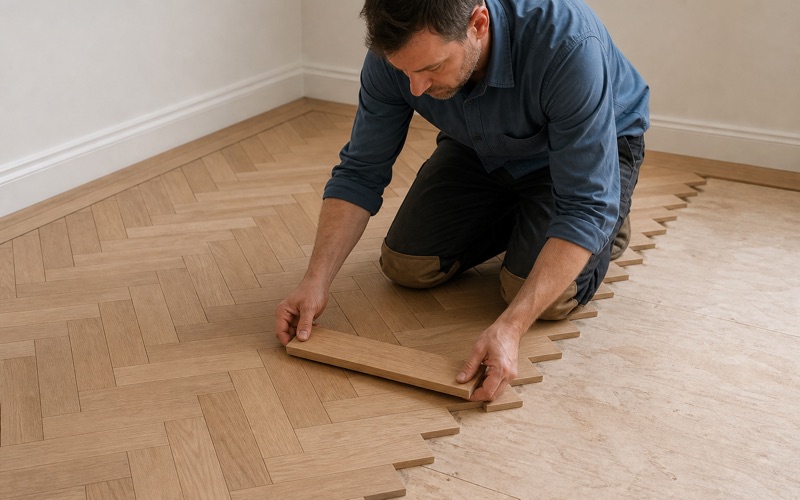
Weaving means staggering the end joints of the new boards into the surrounding field rather than cutting a rectangle and dropping a block into it. It is slower and it is the only version that disappears. We keep any sound boards we lift, because on a floor where matching stock is scarce a salvaged board from one room frequently solves a problem in another.
Dutchman Patches
Where damage sits within a single board and does not justify lifting it, a dutchman is a shaped piece let into the board itself, matched for species and grain direction. It is a traditional repair and a very good one. It suits burn marks, small areas of rot and localized damage particularly well, and it needs no match on tongue and groove profile at all, which matters where the original milling is no longer produced.
It is also far less disruptive, since nothing is lifted and the room stays usable. On a modest budget it frequently delivers most of the benefit of a replacement for a small fraction of the cost.
Squeaks and Movement
A squeak is almost never the finish boards rubbing each other. It is usually subfloor moving against a joist, or a fastener that has worked loose and now moves in its hole every time somebody stands on it.
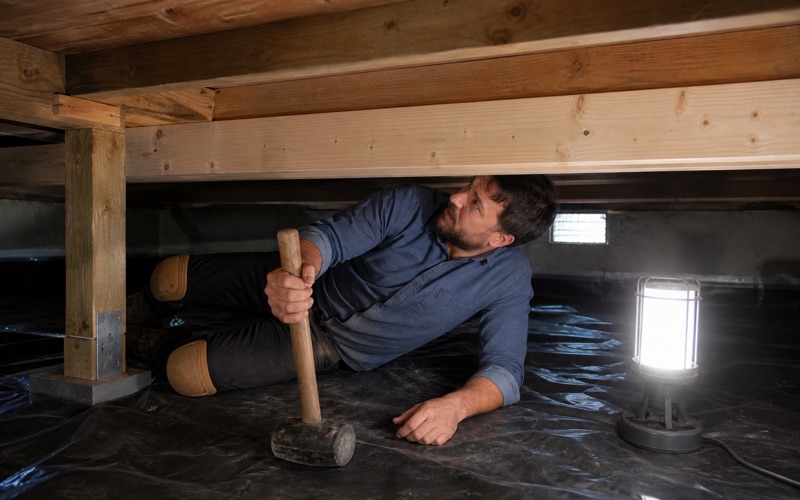
Where there is crawl access the proper fix is from underneath with blocking, shims and screws, which leaves nothing visible upstairs and actually lasts. Face-screwing from above hides it for a season and leaves plugs across the boards. We ask about access before proposing a method, because the route underneath is available more often than homeowners expect and it is both cheaper and more permanent.
What Sits Underneath
Slab and Raised, Both Present
The housing here spans enough of a period that both foundation types turn up, sometimes on the same street. We establish which a house has from below wherever there is access rather than from the doorstep.
On a slab the options are glue-down or floating engineered, chosen against a measured relative humidity reading. On a raised floor solid nail-down is available and remains the longest-lived floor we install. An addition on a slab behind an original raised house is common, and it means the answer genuinely changes room to room within one building rather than applying to the whole address.
Testing and Measuring
Concrete releases moisture for far longer than most people expect, and a slab that looks dry can sit above the level a wood floor tolerates. We place an in-situ relative humidity probe to the ASTM F2170 method and read it once equilibrated. On a raised floor we take wood moisture content on the boards and on the subfloor with meters set for the species present, and the subfloor is normally the slower of the two to come down. Those readings go on paper with dates and locations, because that record supports a manufacturer warranty later and a verbal assurance is worth nothing at that point.
Moisture From the Crawl Space
Under a raised floor, bare soil releases moisture into the joists and the underside of the boards continuously through the year. A polyethylene ground cover with genuinely clear vents corrects a great deal of that. It is among the cheapest interventions available in this trade and one of the most frequently skipped, largely because it is invisible once done and nobody photographs a crawl space. We look before quoting any floor work, because sanding a floor while the source underneath is still active buys one season and permanently spends thickness the floor cannot recover.
Practical Matters
Working in a Small House
These are modest houses and there is rarely a spare room to absorb furniture during a full sand. Where the furniture goes is a genuine logistical question rather than a detail to sort out on the morning. We work it out at the quote stage, and closets are the part people consistently underestimate because they hold far more than anyone expects. We flag them specifically rather than discovering them on the first day.
Phasing a job in halves keeps a household living in the house, at the cost of a slightly longer schedule. In an occupied home that is almost always the right trade.
Finish Choice and Getting Back In
Waterborne finishes cure faster and carry far less odor than oil-modified systems. In a small occupied house that matters considerably more than any difference in appearance does.
We give the dates in writing: when the floor takes socks, when it takes furniture and when it takes rugs. Cure and dry are different things and a rug going down early is the most common way a new finish is spoiled. Where the layout means a coated floor closes the only route to a bedroom, we identify those nights a week ahead rather than on the evening itself.
Matching Board Later On
Where boards need replacing, the tongue and groove profile is usually harder to match than the species, since milling has changed and thickness was far less standardized on older stock. Matching gets settled before a repair is priced rather than after boards are up. If we cannot source something that genuinely fits, that changes the recommendation entirely, and it is far better known while the options are still open. Keeping a small quantity of material at the end of any job makes a future repair straightforward, and we set some aside and tell you where it has been put.
Salvage is frequently the answer where current milling will not match, and reclaimed board of the right era can be worked to fit. It takes longer to find and on a floor worth keeping it is still cheaper than replacing a room.
- Licensed & Insured
- 20+ Years Experience
- Free Written Quotes