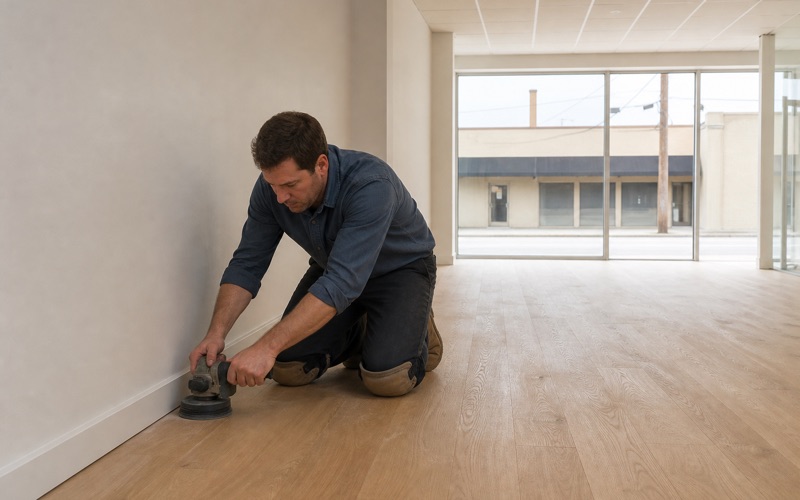
Bell Gardens Wood Flooring provides wood flooring in East Rancho Dominguez for housing where the finish floor is regularly the smaller half of the work. Close to half of these homes predate 1950, most sit on raised construction, and after seventy or eighty years the deck underneath has often had a harder life than the boards on top of it.
That is the situation this page is about. A floor that flexes underfoot, a soft patch by a doorway, or a run of squeaks that keeps returning after somebody has fixed it are all reporting a condition below the finish boards rather than a defect in them. Laying a new floor over that reproduces the problem on newer wood.
So we treat subfloor and structure as a job in its own right, with its own inspection and its own line on the quote. It makes a quote longer to read and it is the only version that reflects what the work actually is, and it matters because the two halves carry different permit positions.
Telling a Floor Problem From a Subfloor Problem
What Flex Underfoot Means
A floor that gives slightly when you walk across it is not a finish problem. Deflection comes from the structure below: a joist that has sagged, a bearing point that has rotted, or subfloor sheeting that has delaminated and lost its stiffness. Sanding and refinishing a floor in that condition produces a beautiful surface that still moves, and the movement will open joints and reintroduce squeaks within a year. We identify it before quoting any finish work, because the sequence matters more than either job does alone.
It is also the single most common reason somebody calls us about a floor another contractor laid. The finish work was frequently done perfectly well; what was skipped was establishing whether the deck underneath could carry it.
Squeaks and Where They Come From
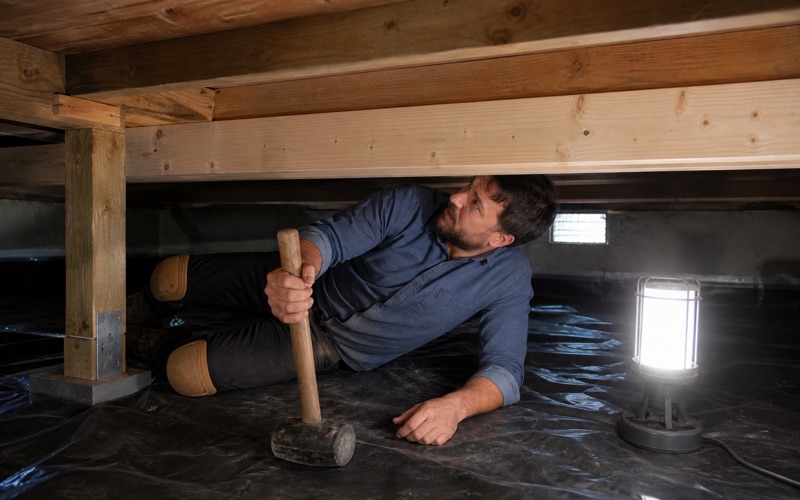
A squeak is almost never the finish boards rubbing against one another. It is usually subfloor moving against a joist, or a fastener that has worked loose and is now moving in its own hole every time somebody stands on it. Chasing it from above with surface screws hides it for a season and leaves plugs across the boards. With crawl access the proper fix is from underneath with blocking, shims and screws, which leaves nothing visible upstairs and actually lasts.
This area has enough raised construction that the route underneath is available far more often than homeowners expect. It is worth asking about before accepting a repair that involves screwing through a finished floor from above.
Reading the Pattern Before Opening Anything
The distribution of symptoms usually identifies the cause faster than an inspection hole does. A soft line running across a room points at a single joist, a soft area in one corner points at a bearing point, and general springiness across a whole room points at the sheeting. We map that first and open where the map says to open. It is cheaper than exploratory holes, more reliable than guessing from the age of the house, and it means the access panel goes back somewhere sensible rather than in the middle of a living room.
Where there is crawl access, most of that inspection happens from below and nothing needs opening at all. We would always rather look from underneath than cut into a floor that may turn out to be perfectly sound. Looking for wood flooring closer to Bellflower? See Wood Flooring Services in Bellflower.
The Work Underneath
Sistering and Replacing Joists
Where a joist has sagged or rotted at its bearing, the repair is either sistering a new member alongside the existing one or replacing the affected section outright. Which one applies depends on how much sound timber remains and on the access available. We look for the cause as well as the damage, because a rotted joist end almost always means water has been arriving from somewhere that will still be arriving afterward. Repairing the timber without addressing that is a repair with a known expiry date.
The usual sources are a failed perimeter drain, a plumbing leak that has been running slowly for years, or ground water sitting against a foundation wall. None of those is flooring work, and we say so rather than quietly repairing around them.
Replacing Subfloor Properly
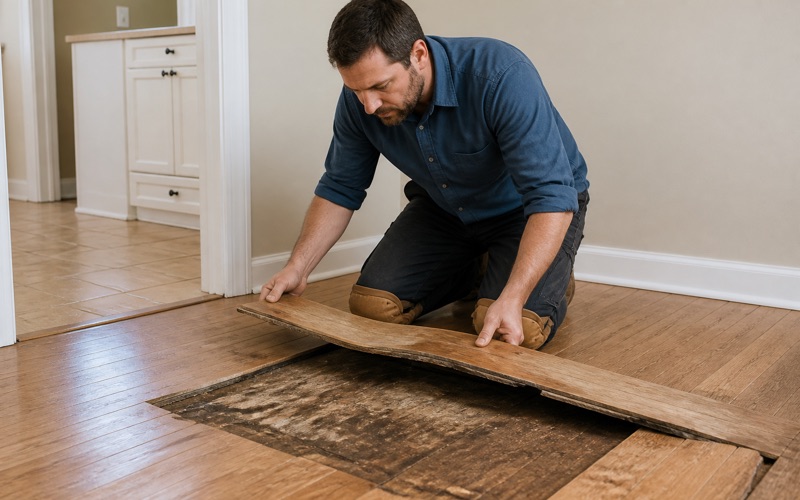
Board subfloor that has cupped, plywood that has delaminated, or sheeting that moves underfoot has to come out before any finish floor goes down. The critical detail is that replacement runs to the joists rather than patching between them. A patch supported on nothing at its edges produces a new soft spot within a year, and it is exactly where the next contractor will find a problem. It costs more material and more labor to do it properly, and it is the only version that does not come back.
Matching thickness matters as much as support. A sheet dropped in at a different thickness from the surrounding deck leaves a step under the finish floor, which telegraphs through the boards and is far harder to correct once they are down.
Where the Permit Line Sits
Installing floor covering is exempt finish work under the county code that applies here, since East Rancho Dominguez is an unincorporated community with Los Angeles County as its building authority. Structural repair is a different matter entirely. Repairing or replacing joists or subfloor is altering the building, which the residential code treats as permit work. We tell you which side of that line a job falls on before quoting, and we quote the structural half separately rather than folding it into a floor price.
Moisture, Because It Is Usually the Cause
The Crawl Space Under an Older House
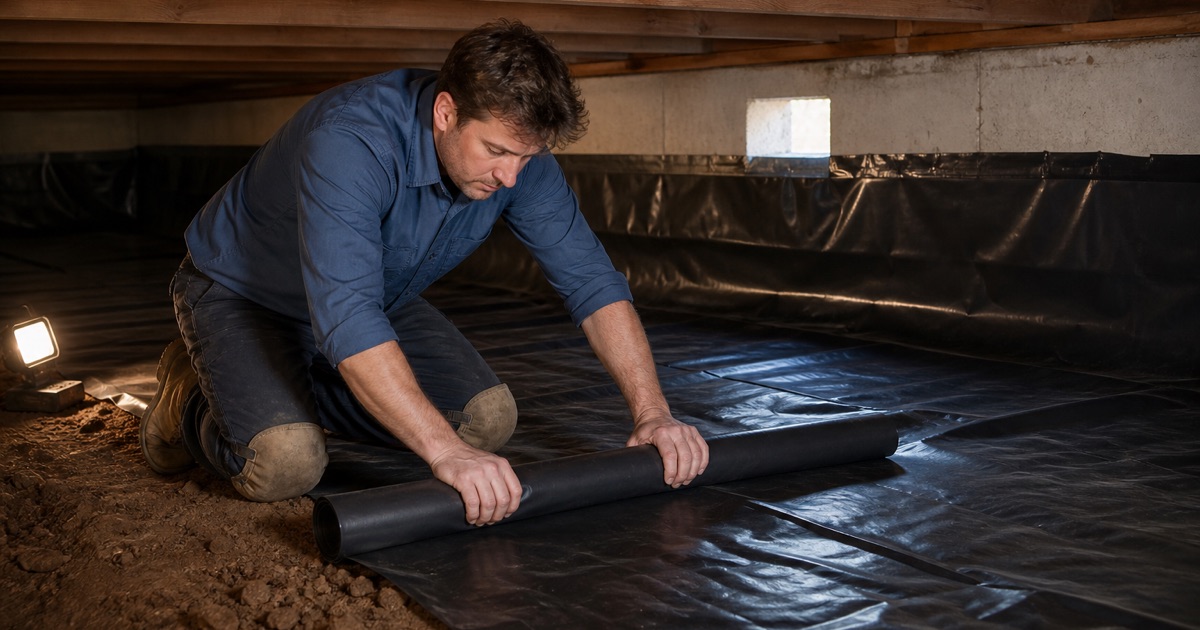
Under a house of this age the crawl space is frequently much as it was built, with bare soil, original venting and no ground cover at all. That soil releases moisture into the joists and the back of the boards continuously, all year, whether or not anybody has been down there. A properly laid polyethylene ground cover with genuinely clear vents corrects a great deal of that for very little money. It is among the cheapest interventions available in this trade and one of the most frequently skipped, because it is invisible once done.
Cupping That Reports a Source
A floor cupping evenly across a large area is rarely a defect in the boards. It is the floor telling you that its underside is wetter than its top, and the useful work is finding out why rather than deciding what to do to the wood. Sanding a cupped floor before the source is corrected and the boards have equalized produces a crowned floor within months, on less remaining thickness than before. We will decline to sand a floor in that state and explain exactly why rather than take the work.
Equalization takes weeks rather than days, and there is no way to hurry it that does not damage the floor. We monitor with meters and return when the readings say the floor is ready rather than working to a date agreed before anybody knew what the readings were.
Readings Rather Than Opinions
We take wood moisture content on the boards and on the subfloor with meters set for the species actually present, and the subfloor is normally the slower of the two to come down. That slower number is the one that governs whether anything can proceed. East Rancho Dominguez, also known as East Compton, had a population of 15,114 at the 2020 census and shares the 90221 ZIP code with Compton. It is a small, long-settled community, and the housing has largely stayed in use rather than being redeveloped, which is why so much original structure is still there to assess.
Putting the Floor Back
Sequencing the Two Halves
Moisture source first, then structure, then equalization, then the finish floor. Compressing that sequence to save a week is the single most common reason a new floor fails inside its first year, and it is entirely avoidable. We will hold a job rather than lay boards over a problem that is still active, and we say so at the quote rather than on the morning. It occasionally costs us the work and it has never once been the wrong call.
What Can Go Back Down
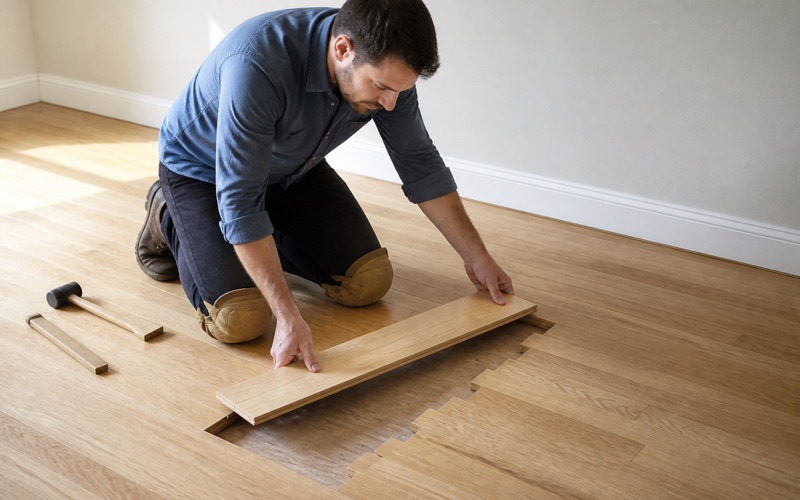
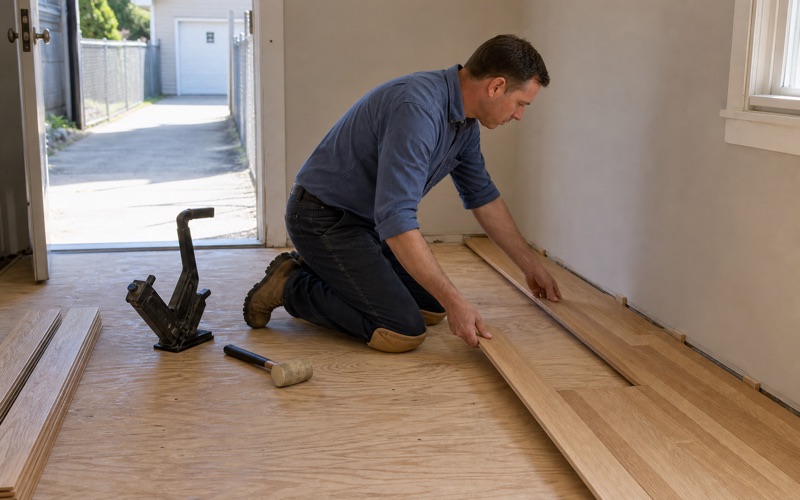
Where the original boards are sound, they frequently go back down over a repaired deck and refinish beautifully, which is both cheaper than replacement and better material than anything currently sold. We assess that properly rather than assuming a floor that came up is finished. Where replacement is genuinely needed, solid nail-down over a sound repaired subfloor is the longest-lived option available and can be sanded several times across decades. That is worth the investment on a house somebody intends to keep.
Where the budget does not stretch to that, engineered board over the same repaired deck is a perfectly respectable answer and will still outlast a solid floor laid over an unrepaired one. The structural work is what carries either decision.
Records Worth Keeping
Every reading we take goes on paper with its date and location, and any structural work is documented as it is done. That record supports a warranty later and tells the next contractor what was found and what was corrected. It matters more than it sounds on a house where work happens in stages over years. A subfloor repaired properly in one room and documented is a known quantity; the same repair undocumented is something the next person has to establish all over again.
- Licensed & Insured
- 20+ Years Experience
- Free Written Quotes