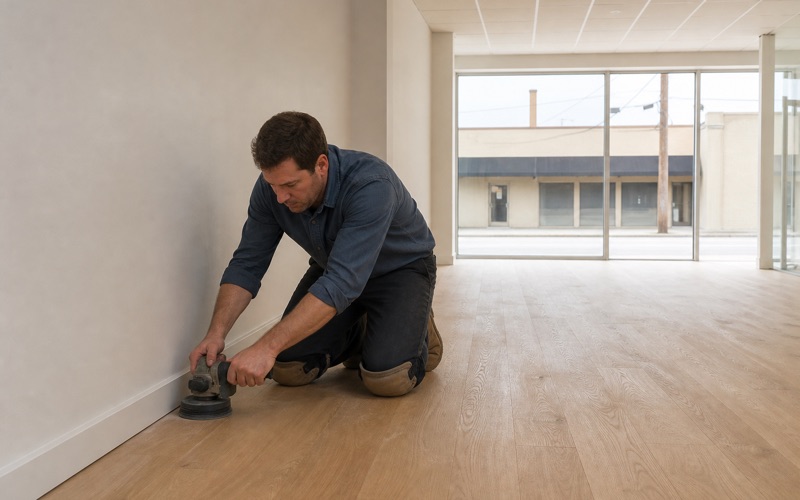
Bell Gardens Wood Flooring provides wood flooring in Alhambra with a bias toward taking as little off a floor as the job allows. Around a third of the housing here predates 1950 and a substantial part of that is genuine prewar stock, laid with oak strip of a grade and a milling standard that is no longer produced. Those floors have usually been refinished at least once already, sometimes more than once, and every pass has spent thickness that cannot be replaced. The question that decides everything on a house like this is not what finish you want but how much wood is left to work with.
So we measure remaining thickness at a floor vent or a threshold before quoting rather than estimating from the surface, and we look hard at whether a full sand is needed at all. On this stock a screen and recoat is frequently the correct answer and it costs a fraction.
Prewar Oak and What Is Left of It
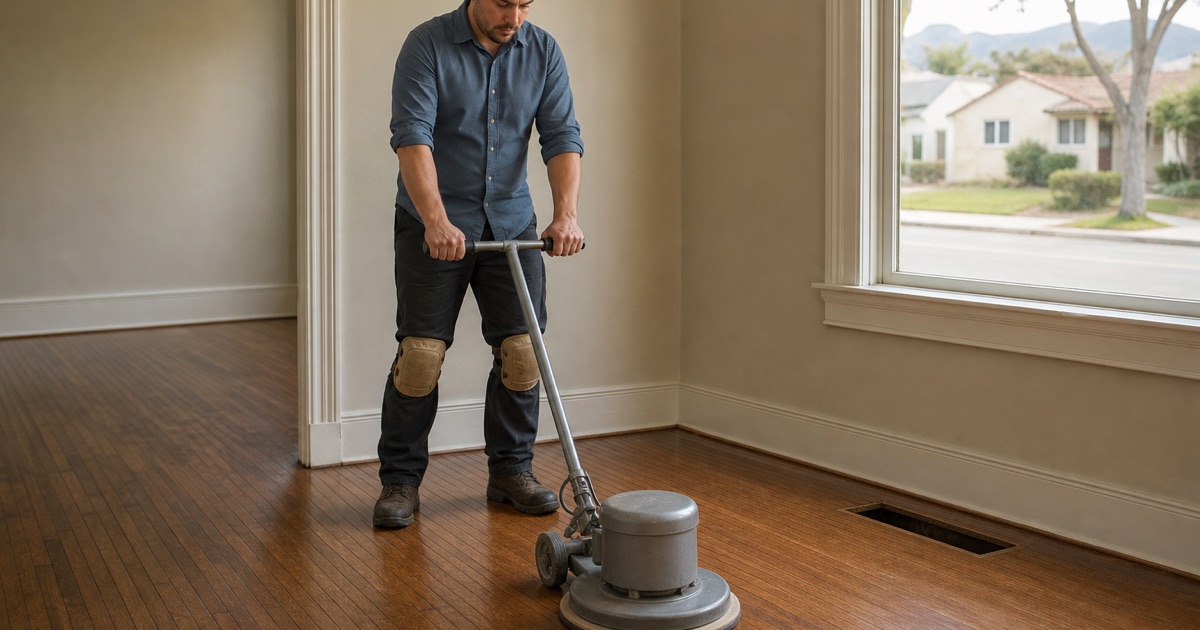
Measuring Before Recommending
Solid strip flooring can be sanded down to the top of the tongue, which from new allows several full refinishes over a very long life. How many remain depends entirely on what previous owners and contractors have already taken off. We measure at a vent, a threshold or a heating register rather than judging from the surface, because the surface tells you almost nothing about what sits below it. That measurement takes minutes and it changes the recommendation completely.
Alhambra was incorporated in 1903 and had a population of 82,868 at the 2020 census, sitting in the western San Gabriel Valley about eight miles east of the downtown Los Angeles civic center. Its older tracts carry housing from the earliest decades of that history.
Screen and Recoat as the Default
Where a finish is worn but intact and nothing has stained or damaged the wood itself, abrading the surface with a buffer and screen and laying a fresh coat over it resets the floor without touching the wood at all. It takes a day on most rooms, costs a fraction of a full refinish, and spends none of the floor’s remaining thickness. On a prewar floor that has already been sanded twice, that last point is the one that matters most.
We propose it wherever it genuinely applies rather than only when asked. It is the smaller invoice and it is the right recommendation often enough on this stock that making it a default has been straightforwardly good practice.
When a Full Sand Is Genuinely Needed
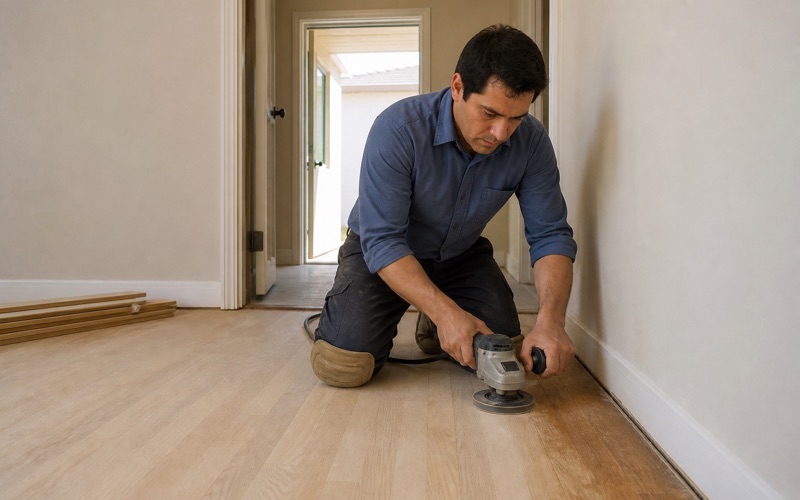
Once damage has gone through the finish and into the wood, only a full sand removes it, and there are floors where that is the only honest answer. Deep staining, widespread scratching into the timber, and cupping that has been left to set all qualify. Where we do sand, the discipline is taking the minimum that removes the damage rather than the maximum the machine will do in a pass. We work through a proper grit sequence so each pass removes the scratch pattern the last one left.
Skipping grits is the most common way thickness gets wasted. Jumping from a coarse paper to a fine one leaves marks the fine paper cannot remove, and the usual response is another coarse pass. Looking for wood flooring closer to Rosemead? See Rosemead Wood Flooring.
The Character of a Prewar Floor
Grades, Widths and What They Mean
Mill grade describes appearance rather than strength, running from clear and uniform through grades carrying knots, mineral streak and color variation. Prewar floors were frequently laid in narrow strip of a fairly select grade in the principal rooms. That narrow strip is part of why these floors have survived. Narrow boards move less across their width than wide ones, so they gap less, cup less and stay flatter through eighty years of seasonal change.
Replacing narrow prewar strip with a modern wide board changes the character of a room considerably more than people expect. We say so before it is decided rather than after it is laid.
Patina That Cannot Be Reproduced
A floor of this age has taken on a color from decades of light and use that no new finish reproduces, and on most houses the aim is to keep it rather than to alter it. A clear waterborne finish preserves what is there. An oil-modified system will warm it further, which suits some interiors and overwhelms others. Neither is wrong, and the decision is much easier made by sampling on the actual floor in the room’s own light.
We sample rather than working from a chart. A finish decision made from a sample board in a different building is the most common way somebody ends up with a floor a shade they did not intend.
Borders and Feature Work
Prewar floors in this area occasionally carry a border, a feature strip at a threshold, or a change of direction between rooms that was deliberate rather than accidental. Those details are frequently the most valuable thing about a floor. They are also the easiest thing to lose. A contractor sanding aggressively across a border can take out the definition between two species, and a repair laid without regard to the original layout destroys the logic of the room.
We record what is there before starting and work to preserve it. Where a border has been damaged, restoring it is generally possible and it is worth asking about rather than assuming it is gone.
Choosing What Goes Down
Solid Wood Where the Structure Allows
Where a prewar house has a sound raised floor and a crawl space in reasonable condition, solid nail-down remains the longest-lived floor available and is the natural match for the building. It can be sanded back several times across many decades. What decides whether it is available is the condition of the framing and the moisture behavior underneath rather than the budget. We get below and look before recommending it, because a solid floor over a substrate we doubt is a slow regret.
On a house of this age it is also the sympathetic answer. A prewar interior with a modern engineered floor frequently reads as slightly wrong even when nobody can immediately say why.
Where an Addition Changes the Answer
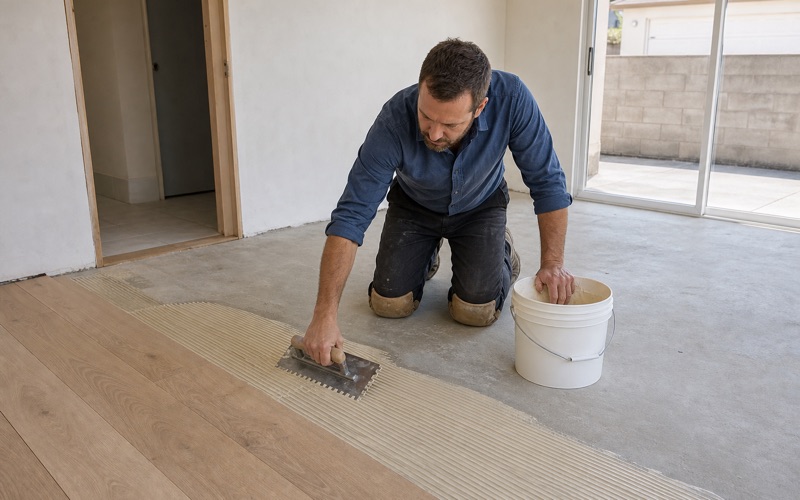
Plenty of these houses carry a later addition on a slab behind the original, which puts two genuinely different substrates under one roof. That is normal and it occasionally means two products within one house. Over the slab, glue-down or floating engineered is the correct choice, selected against a measured relative humidity reading rather than a preference. Solid wood needs something to fasten into that concrete does not provide.
Making the two halves read as one floor takes care in specification rather than luck. Species, grade, width and finish get chosen together, and it is far easier planned at the quote than corrected afterward.
Wide Board in an Older Room
Wide plank is frequently requested and it is worth understanding what it asks for. Wood moves across its width, so a wide board moves considerably more than the narrow strip these houses were built with. That means a flatter substrate, tighter moisture control and often both adhesive and mechanical fixing. In a prewar house with a board subfloor, meeting those conditions can involve real preparation cost.
We will lay it where the substrate can genuinely take it and say plainly where it cannot. A wide floor laid over a substrate that was not prepared for it gaps and cups far more visibly than narrow strip ever would.
Working on Older Houses
Lead-Safe Practice
On any house built before 1978, sanding falls under the federal Renovation, Repair and Painting rule, and a large share of this housing qualifies. Sanding is precisely the disturbance the rule governs, and older paint around a floor perimeter is exactly its concern. Containment, sealed openings and controlled cleanup are the required method rather than an upgrade offered afterward. We work that way as standard on houses of this age.
It also produces a materially better finish. Most of what spoils a coat is airborne dust settling into it while wet, so a contained job simply looks better than one done with the doors propped open.
What Is Under a Raised Floor
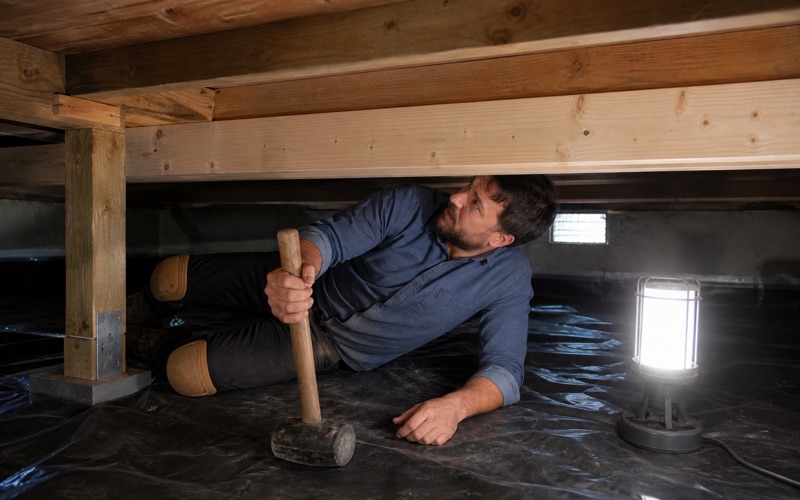
Prewar housing here is largely raised construction over a crawl space, and that crawl is where a great many cupping complaints are actually resolved. Bare soil releases moisture into the joists and the underside of the boards continuously.
A properly laid polyethylene ground cover with genuinely clear vents corrects a surprising share of those problems for very little money. It is among the cheapest interventions in this trade and one of the most frequently skipped. We look before quoting any floor work at all, because sanding a floor while the source underneath is still active buys one season and permanently spends thickness a prewar floor can rarely afford.
Matching Board of This Period
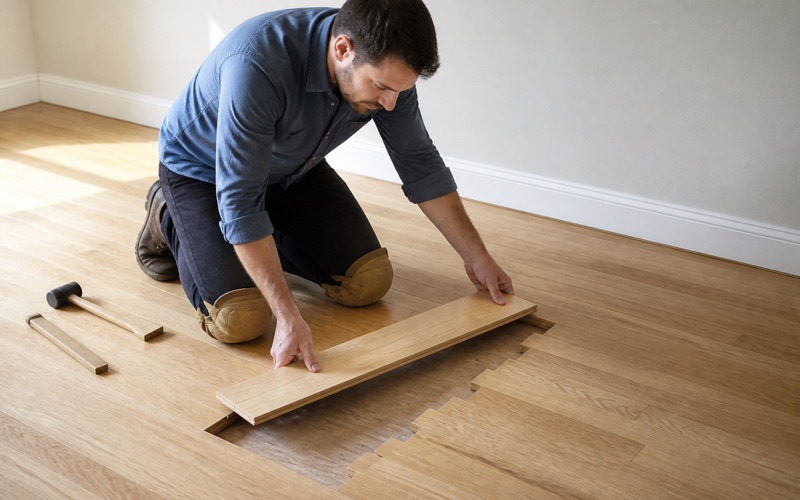
Where boards genuinely need replacing, the tongue and groove profile is almost always harder to match than the species, since milling standards have moved and thickness was far less standardized when these floors went down. Salvage is usually the answer and it is worth the search. Reclaimed board of the right period, species and thickness can be worked to fit where new stock simply cannot. We identify species, grade, width, thickness and profile before sourcing anything, and we say at the quote whether a genuine match is achievable rather than discovering it with the floor already open.
- Licensed & Insured
- 20+ Years Experience
- Free Written Quotes